Alpine property and mountain living
BUYING SKI PROPERTY IN SWITZERLAND FOR UK NON-RESIDENTS
A Swiss ski home can be within reach for a British buyer living in the UK, but the search must start with eligibility. Understand the holiday-home rules, local approvals and practical purchase steps before choosing your mountain base.
CAN A UK RESIDENT BUY SWISS SKI PROPERTY?
Yes, a British person living outside Switzerland may be able to buy an eligible ski holiday home. However, this is not an unrestricted right to purchase any apartment or chalet. Switzerland controls acquisitions by people abroad under legislation commonly called Lex Koller. The buyer's status, the property's use and its location all matter. A resort being popular with British visitors does not establish that every home there is available to them.
In this guide, UK non-resident means a UK buyer who is not resident in Switzerland, rather than someone who has left the UK for another country. Different residence arrangements can change the assessment. Start with your intended use and read our ski property buying guide to organise the wider search. Then ask a qualified Swiss adviser to confirm the rules for your circumstances before you make a binding commitment.
UNDERSTAND LEX KOLLER BEFORE SHORTLISTING HOMES
Lex Koller is the usual name for the federal restrictions on acquisitions of Swiss real estate by foreign non-residents. The Federal Office of Justice explains that foreign citizens living abroad generally fall within those rules. An eligible holiday home is one possible route to authorisation; an ordinary residential investment is not interchangeable with it. Buying through a company is not a simple workaround.
For a standard holiday-home purchase, the competent authority in the canton where the property sits decides whether approval can be granted. Local restrictions may narrow the federal framework. Obtain confirmation of the intended acquisition structure and permitted use, not just a verbal assurance that foreigners can buy in the resort. A seller's foreign nationality is also insufficient: the official guidance makes clear that a new buyer can still need their own authorisation when acquiring a home already held by another non-resident.
BREXIT, RESIDENCE AND YOUR RIGHT TO STAY
The Swiss government's public guidance distinguishes UK nationals resident in Switzerland under protected acquired rights from those outside that category. British buyers who remain living abroad should not assume that pre-Brexit arrangements remove the need for purchase approval. The assessment concerns actual circumstances, not simply whether a passport is British or whether the owner has holidayed in Switzerland for many years.
Property ownership does not grant a Swiss residence permit. It also does not give an automatic right to work remotely from the chalet indefinitely or ignore immigration limits. Check the travel and residence rules separately for the people who will use the home. If relocation is the real objective, take immigration and tax advice before building a purchase plan around it. A genuine main-residence acquisition and a holiday home are different legal propositions; calling a holiday apartment your main home does not change its status.
CHOOSE THE LOCATION AND THE PROPERTY TOGETHER
Holiday-home authorisation requires a canton that provides the relevant grounds for approval and a property in a tourist resort designated by that canton. Cantons and communes can impose further restrictions. That makes eligibility a property-level question, not a general label attached to Switzerland's ski market. Ask for the property's identification, its recorded use and an explanation of the legal route available to your purchase.
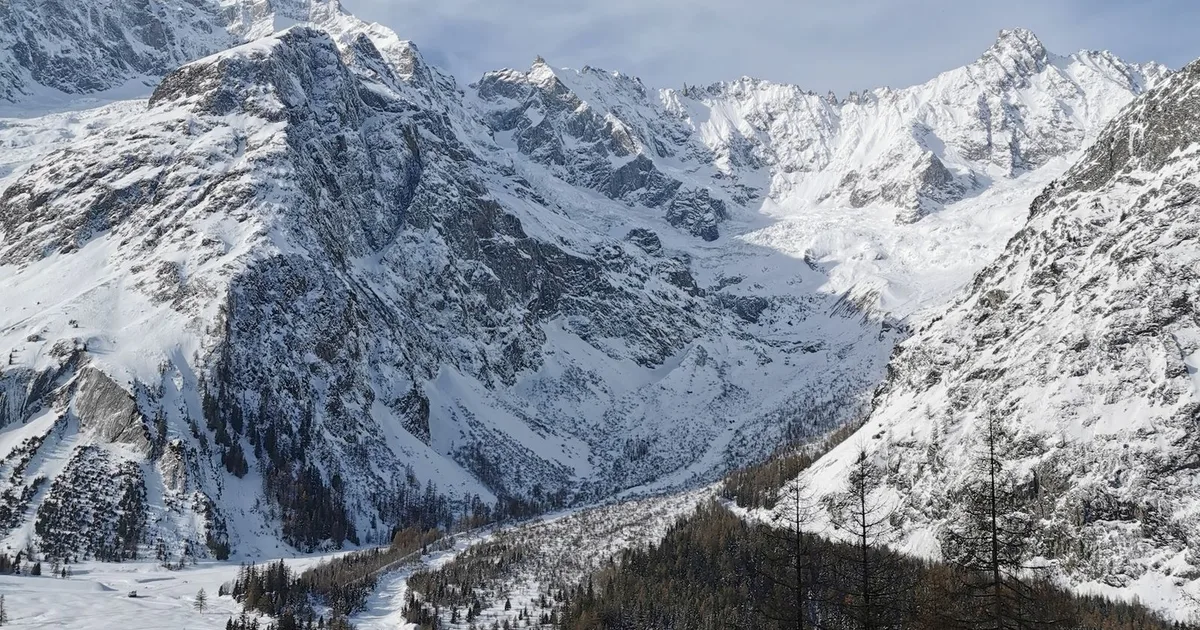
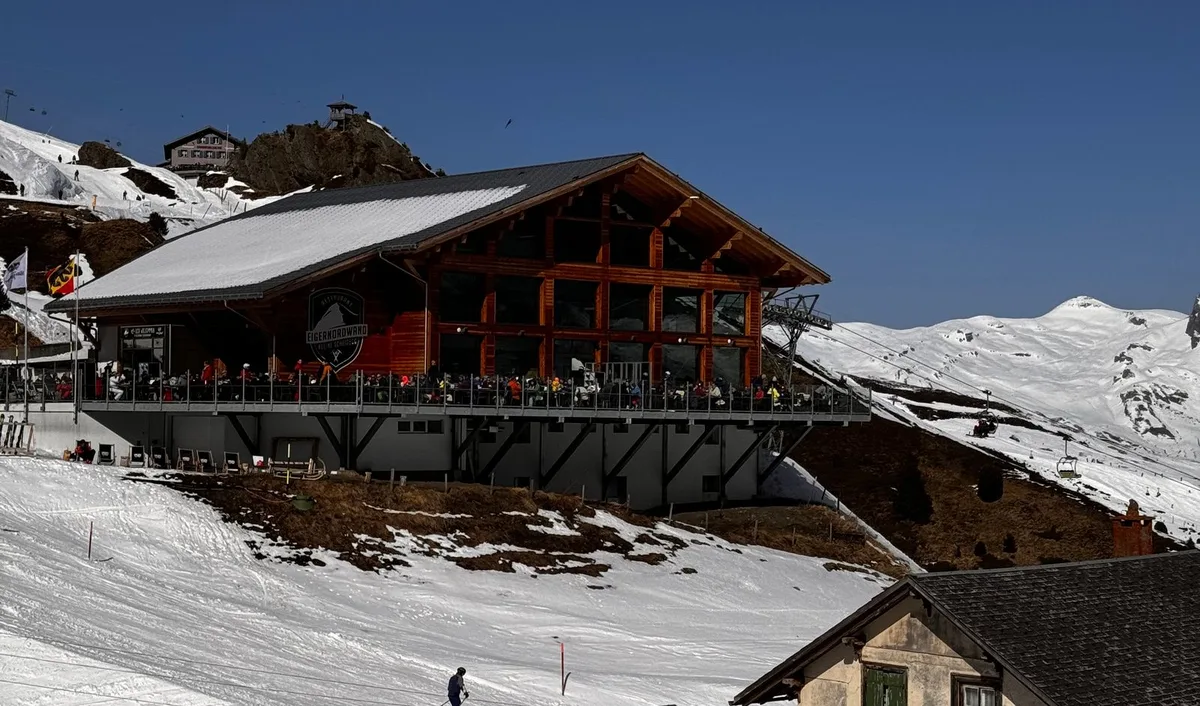
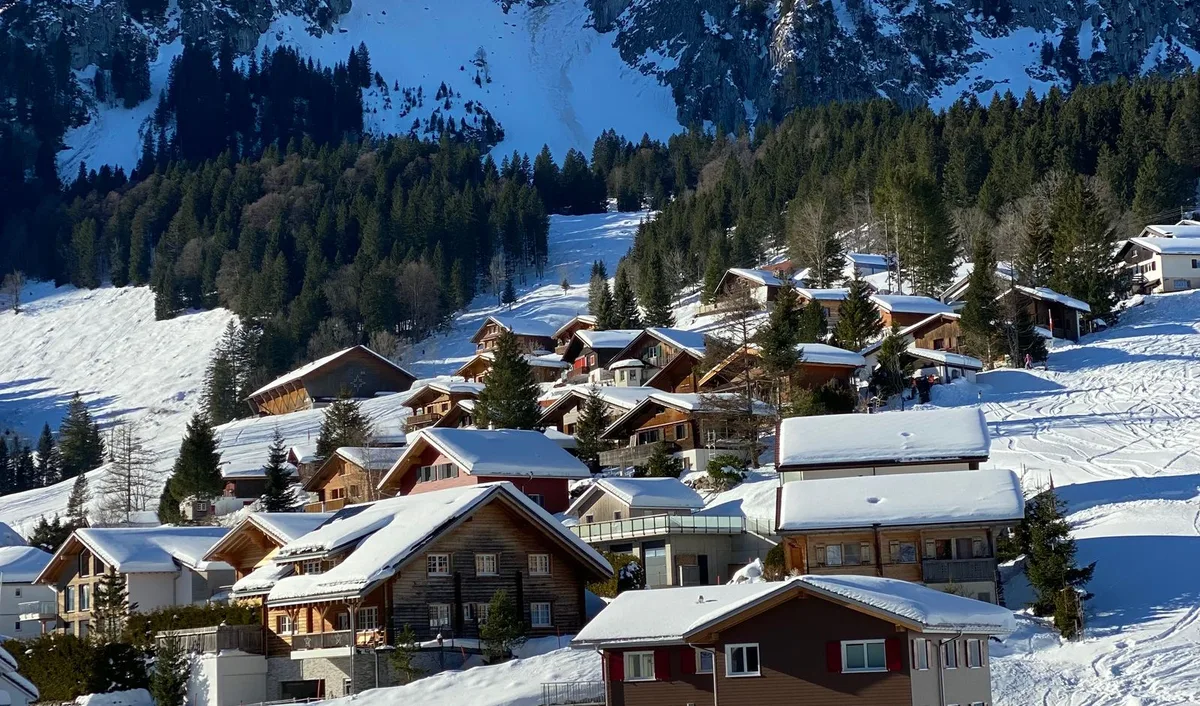
A productive shortlist combines these checks with the way you want to spend time in the mountains. Consider the lesson meeting point, access to groceries, railway connections and what happens when snow conditions change. The photographs in this article show Swiss mountain settings, not homes offered for sale or evidence of foreign-buyer eligibility in the pictured villages. Visit promising locations in person and compare ordinary daily journeys as well as the view from the balcony.
QUOTAS, SIZE LIMITS AND FAMILY OWNERSHIP
The Swiss public guidance describes a national annual quota of 1,500 holiday-home and aparthotel authorisations allocated between cantons. Do not interpret that as 1,500 homes currently available to buy. The Federal Office of Justice explains that some resales do not consume a new quota allocation, while individual approval can still be needed. Ask how the quota applies to your transaction and whether it affects the likely timetable.
As a general rule, holiday homes are limited to 200 square metres of net living area and, for individual houses, 1,000 square metres of land. The federal FAQ describes possible justified exceptions, not a universal entitlement to a larger property. Net living area also has a legal definition that may differ from brochure measurements. Ordinarily, only one holiday home is allowed per family, including a spouse or registered partner and children under 18. Disclose existing Swiss holdings to your adviser.
CHECK SECOND-HOME RULES AS WELL AS BUYER APPROVAL
Foreign-buyer permission is only one part of the legal picture. Switzerland also restricts new second homes in communes where the second-home share exceeds 20%, subject to the legislation's exceptions and categories. This separate framework is often called Lex Weber. It does not mean every existing holiday home in such a commune is unavailable, nor that Lex Koller approval overrides planning and use restrictions.
Ask the notary or legal adviser to explain the home's authorised use, construction history and any conditions recorded against it. Establish whether an apartment is available for ordinary holiday use or carries a main-residence, tourist-accommodation or managed-use obligation. For a new development, check the building permission and the proposed ownership documents together. Marketing phrases such as unrestricted use need documentary support. The useful question is not whether a property is called a second home, but exactly what you can lawfully do with it.
ARRANGE FINANCE AND A STERLING-TO-FRANC BUDGET
Speak to lenders familiar with non-resident Swiss purchases early. Eligibility, deposit requirements, valuation and affordability depend on the lender, your finances and the property. Do not assume a UK mortgage decision transfers to Switzerland or that rental forecasts will support the borrowing you want. Have the bank explain currency, interest terms, repayments and any requirement to reduce the outstanding balance over time.
If your savings or income are in sterling, currency movements can change both the purchase budget and ongoing costs. Allow for conversion charges and the dates when deposits, fees and completion funds are due. Compare financing offers on their total obligations rather than the advertised interest rate alone. Retain a reserve after completion for repairs and unexpected bills. Before sending funds, verify payment instructions with the notarial office through independently established contact details, especially if an email announces changed bank details.
BUDGET FOR PURCHASE COSTS AND ANNUAL OWNERSHIP
Request an itemised acquisition estimate for the canton and property concerned. Depending on the transaction, costs can include transfer taxes, notarial work, land-register charges, authorisation fees, mortgage-related charges and specialist advice. Their allocation and amount vary, so a single nationwide percentage is not a reliable budget. Ask when each amount becomes payable and whether the quoted purchase price includes all agreed items.
Annual planning should include insurance, heating, electricity, communal charges, maintenance and any local charges that apply. A chalet can bring snow-clearance and external-upkeep responsibilities; an apartment can carry shared-building obligations and future works. Obtain Swiss and UK tax advice on your own position, including reporting, rental income, disposal and succession. Tax treatment and reform commencement dates require current advice, not an old sales brochure. Our hidden ski-property buying costs guide helps separate the asking price from the wider commitment.
INSPECT THE BUILDING, TITLE AND SHARED OBLIGATIONS
Legal eligibility does not establish that the building is sound. Commission an appropriate technical inspection and ask about the roof, heating, insulation, moisture, drainage and the condition of terraces or balconies. Mountain weather can make maintenance demanding. Check road access, parking rights, equipment storage and who is responsible for snow clearance. A short summer viewing cannot demonstrate that the winter arrival works equally well.
For an apartment, review condominium rules, accounts, meeting minutes, reserve funds and planned works. Clarify your share of common costs and any restrictions on alterations or letting. For a chalet, establish boundaries, easements, services and planning history. Ask how any identified natural hazards affect permitted work and insurance. A ski-in, ski-out description should be tested against the actual access rights, snow-dependent route and the ability of the least confident person in your household.
UNDERSTAND LETTING BEFORE RELYING ON RENTAL INCOME
A holiday home authorised for a foreign non-resident is not an unrestricted buy-to-let investment. The federal FAQ permits short-term letting subject to conditions but rules out year-round letting and long-term arrangements that prevent the owner using the holiday home for its stated purpose. Local rules, the individual authorisation and building regulations can add further conditions. Obtain a clear written account of what applies.
Aparthotel units can involve a separate obligation to make accommodation available for hotel-style management, particularly in peak periods. Do not confuse that arrangement with a conventional chalet that you can use whenever you wish. If occasional letting is permitted, calculate net receipts after management, cleaning, utilities, maintenance and tax. Personal holidays may occupy valuable weeks. The purchase should remain affordable when bookings are weaker than expected, rather than depend on a headline gross yield.
PLAN JOINT OWNERSHIP AND THE LONGER TERM
If you are buying with a partner or relatives, agree the ownership shares and decision-making arrangements before signing. Explain who contributes the funds, who will use the home and how running costs will be divided. Ask your adviser how the family ownership limit applies and what happens if one person already has a Swiss holiday property. A private agreement between buyers cannot override the conditions attached to an authorisation.
Consider changes that might happen later: a separation, the death of an owner, a planned transfer to children or a sale. Swiss property rules, succession law and UK tax questions can interact, so coordinate advice rather than assume a UK will answers everything. Keep a record of the advice and the agreed ownership structure. A clear plan does not reduce the pleasure of a mountain home; it helps everyone understand their rights and responsibilities.
Also discuss your likely holding period. Purchase costs, resale restrictions and the pool of eligible future buyers can affect an exit. Ask about the actual property's conditions rather than rely on a promise that every foreign buyer can resell freely after a standard number of years.
FROM RESERVATION TO AUTHORISATION AND COMPLETION
Before paying a reservation sum or signing, have the documents reviewed by a suitably qualified professional. Establish whether the agreement is binding, how money is held and what happens if authorisation or finance is refused. Make the required conditions explicit rather than assume a foreign buyer automatically receives a refund. The correct sequence and formalities should be explained for the canton concerned.
The transaction normally involves a notarial deed and registration in the land register, alongside any necessary cantonal decision. The notary should explain when approval becomes final, when funds must arrive and when title and possession pass. Avoid promising yourself a fixed completion date before the approval and financing timetable is understood. At handover, confirm the agreed contents, keys, meter information, insurance and building contacts. Keep the deed, authorisation and use conditions together for future reference.
YOUR NEXT STEP TOWARDS A SWISS SKI HOME
Begin with a short written brief: who will use the property, which seasons matter, your total budget and whether occasional letting is important. Then combine eligible-property research with finance discussions and local advice. Organise viewings around both lifestyle and practical checks. A successful purchase gives you a place that works on an ordinary family morning, not just in a photograph.
This guide draws on the Swiss government's ch.ch property guidance and the Federal Office of Justice's foreign non-resident FAQ, last amended in September 2026. The official guidance linked below is a useful starting point for understanding permissions and identifying the relevant cantonal authority. It is not a substitute for advice on your transaction. When you are ready to compare mountain destinations and shape your search, return to [skiing property for sale](/) on our homepage.
Read the Swiss government's guide to purchasing property as a foreign national